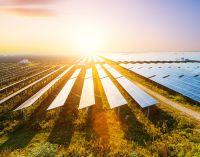
Despite being called the Sunshine State, Florida historically lagged behind top solar states. But in the last decade, it has quickly grown into one of the largest solar markets in the U.S. due to:
- Abundant sunlight year-round
- Rapid utility-scale solar expansion
- Falling solar panel costs
- Growing residential adoption
Types of Solar in Florida
1. Utility-Scale Solar
Florida’s major utilities—especially Florida Power & Light (FPL)—have built dozens of large solar farms. Utility-scale solar is now one of the fastest-growing energy sources in the state.
2. Rooftop Residential Solar
Home solar is increasingly popular in Florida because of:
- High electricity usage (A/C is a big factor)
- Strong solar resource
- Net metering policies (though under debate in recent years)
3. Solar + Battery Storage
Battery adoption is growing, especially for hurricane resilience.
Costs & Incentives
Florida does not offer a state income tax credit for solar, unlike some states.
But homeowners still benefit from:
- Federal Solar Investment Tax Credit (ITC) – currently 30%
- Net Metering – credits homeowners for excess energy sent to the grid (rules vary by utility)
- Property Tax Exemption – solar systems are exempt from property tax increases
- Sales Tax Exemption – solar equipment is exempt from sales tax
Growth Trends
- Florida consistently ranks among the top 3–5 U.S. states for new solar installations.
- Utilities are investing heavily in solar + storage.
- Rooftop solar adoption continues to rise, though policy debates may influence future growth.
Overview: Capacity & Growth
- As of 2024, the state of Florida in total could generate roughly 13,850 megawatts (MW) of solar energy from installed utility-scale (and other large) solar sources.
- The main utility driving this is Florida Power & Light (FPL). At end-2024, FPL reported ~7,038 MW of utility-owned solar PV generation across its service area.
- According to FPL’s latest resource-planning filings, the utility plans to add ~17,433 MW more PV generation by 2035 — pushing total potential solar PV capacity (owned by FPL) to ~24,471 MW by then.
- At the same time, growth across Florida’s solar sector remains rapid: in 2024 alone the state installed ~3.1 GW of new solar capacity (second-most in the US that year).
🏞️ Key Utility-Scale Solar Projects & Programs
Florida Municipal Solar Project (FMSP — municipal-backed)
- Initially comprised two solar farms — Taylor Creek Solar (Orange County) and Harmony Solar (Osceola County), together producing ~150 MW.
- As of 2023, the project announced expansion: by end-2026 it should consist of eight solar farms, with total capacity of ~600 MW from more than 1.8 million solar panels.
- This expansion shows how municipal utilities (not just big investor-owned utilities) are participating in large-scale solar deployment.
Major Utility Solar by FPL & other large plants
- FPL operates many solar “energy centers” — with typical large-scale PV plants sized ~74.5 MW (this size recurs frequently in Florida).
- Among older, notable facilities: DeSoto Next Generation Solar Energy Center — capacity 25 MW, located in DeSoto County (completed 2009).
- There’s also small-/medium-scale solar (e.g. 10 MW plant at the Kennedy Space Center — the Space Coast Next Generation Solar Energy Center).
- According to a 2024 report, building a typical 74.5 MW plant cost around USD 90-100 million (land + labor included).
Trends & What’s Driving Growth
- Solar in Florida is expanding not just by adding many small rooftop systems, but via large, utility-scale PV farms — which are often ~75 MW each.
- This focus on utility-scale is partly because of regulatory/permitting thresholds: many of the large solar farms are designed to take advantage of streamlined permitting when individual facilities are under a certain size (~75 MW).
- The large planned build-outs (for example FPL’s 17,433 MW planned expansion by 2035) show utilities are treating solar as a long-term core generation source.
- Municipal utilities participating via projects like FMSP show that large-scale solar is not limited to investor-owned utilities — broadening who’s involved and expanding solar availability across more communities.