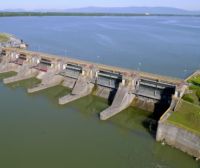
Hydropower in Scotland is a major part of the country’s renewable energy system and has played a key role in electricity generation for more than a century. It uses Scotland’s mountainous terrain, high rainfall, and numerous lochs (lakes) to generate electricity.
Overview of Hydropower in Scotland
- Hydropower produces about 12% of Scotland’s electricity.
- Scotland generates around 85% of the UK’s hydropower.
- Installed capacity is roughly 1.5–1.7 GW of conventional hydro, plus ~740 MW of pumped-storage hydro.
- There are over 50 medium/large hydro plants and dozens of dams, mainly in the Highlands.
Hydropower development accelerated after the 1943 Hydro-Electric Development (Scotland) Act, which created a national program to electrify rural Highlands.
Types of Hydropower Used
1) Conventional (run-of-river or reservoir hydro)
Water stored in dams or flowing rivers spins turbines to produce electricity.
Examples:
- Loch Sloy Hydro‑Electric Scheme – about 152.5 MW capacity.
- Glendoe Hydroelectric Power Plant – 100 MW capacity and ~180 GWh annual output.
- Breadalbane Hydro‑Electric Scheme – network of 7 power stations producing ~120 MW.
2) Pumped-storage hydropower
This acts like a giant battery for the electricity grid:
- Excess electricity pumps water uphill to a reservoir.
- When electricity demand rises, water flows down through turbines to generate power.
Example:
- Cruachan Power Station – 440 MW capacity, built inside a mountain near Loch Awe.
Pumped storage is especially important for balancing intermittent renewable sources like wind.
New and Proposed Hydropower Projects
Scotland is planning several very large pumped-storage projects to support renewable energy.
Examples:
- Coire Glas Power Station – planned 1.3 GW capacity.
- Earba Storage Project – could store 40 GWh of energy with 1.8 GW capacity.
- Fearna Storage Project – potential 1.8 GW pumped-storage scheme.
Overall, more than 3 GW of new pumped-storage capacity is being planned.
Why Scotland is Good for Hydropower
Key geographic advantages:
- High rainfall in western Highlands
- Steep glacial valleys ideal for reservoirs
- Many natural lochs and rivers
- Remote regions needing power infrastructure
These conditions make Scotland one of the best locations for hydropower in the UK.
Role in the Energy Transition
Hydropower in Scotland now serves two main roles:
- Renewable electricity generation
- Energy storage to support large wind farms
Because Scotland has one of Europe’s largest wind fleets, pumped-storage hydro can help balance the grid by storing excess wind energy.
Conclusion:
- Scotland is the centre of UK hydropower.
- Current capacity ≈ 1.5–2 GW.
- Hydropower provides ~12% of Scotland’s electricity.
- Future expansion focuses mainly on large pumped-storage “mega-battery” projects.