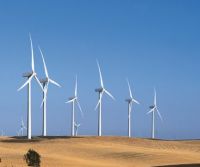
Overview
California is one of the leading U.S. states in wind energy generation. Wind power contributes significantly to the state’s goal of reaching 100% clean electricity by 2045. Development is concentrated in a few key regions with strong, consistent winds.
Major Wind Regions
1. Tehachapi Pass (Kern County)
- One of the largest wind resource areas in the world.
- A central hub for both legacy turbines and newer high-capacity models.
2. Altamont Pass (Alameda County)
- One of the earliest large-scale wind farms in the U.S.
- Undergoing repowering efforts—old turbines replaced with fewer, more efficient, wildlife-safer models.
3. San Gorgonio Pass (near Palm Springs)
- Highly visible and iconic.
- Supplies power to Southern California and operates in a consistently windy mountain pass.
Offshore Wind (Emerging Sector)
California is developing offshore wind in deep-water areas, mainly off:
- Morro Bay (Central Coast)
- Humboldt (Northern Coast)
Because the continental shelf is deep, floating offshore wind platforms—not fixed-bottom turbines—will be used.
Why Wind Power Is Important in California
- Supports decarbonization targets.
- Provides large-scale renewable generation, especially at night, complementing solar power.
- Creates jobs in rural and coastal communities.
Challenges
- Grid integration and transmission upgrades.
- Wildlife impacts (bird-safe turbine design is a focus).
- Siting and permitting delays.
- Offshore wind requires new port and transmission infrastructure.
Current Capacity And Future Goals
- As of mid-2025, the grid operator California Independent System Operator (CAISO) reports that among “installed renewable resources,” wind accounts for about 8,373 MW of capacity.
- In the same breakdown, solar dominates: roughly 21,240 MW.
- In total (as of 2023), about 67% of retail electricity sales in California came from renewable and zero-carbon generation (solar, wind, hydro, geothermal, nuclear, etc.).
- Of that renewable/zero-carbon pool, “eligible under the state’s renewables portfolio standard” (i.e. largely wind + solar + certain other renewables) made up ~ 43% of the total.
- The California Energy Commission (CEC) adopted a plan in July 2024 to develop offshore wind energy, aiming for up to 25,000 MW (25 GW) of offshore wind capacity by 2045, using advanced “floating turbine” technology.
- As part of that plan, California reaffirmed its commitment to the global Global Offshore Wind Alliance (GOWA), coupling state-level ambition with international collaboration on offshore wind deployment.