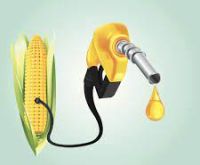
In the U.S., when people talk about “ethanol use,” they generally refer to fuel ethanol — ethanol blended with gasoline for use in cars.
Ethanol is the most widely used biofuel in the U.S. — in 2022 it accounted for about 82% of biofuel production and 75% of biofuel consumption.
Nearly all U.S. ethanol is derived from corn starch (not sugarcane as in some other countries).
Production & Consumption: How Much Ethanol Is Used?
In 2022, U.S. production of fuel ethanol was ~ 15.36 billion gallons (net production) — and that year consumption (blended into motor gasoline) was ~ 14.02 billion gallons.
For 2024, consumption reached about 14.25 billion gallons.
On a volumetric scale this amounts to hundreds of millions of barrels (since there are ~42 gallons in a barrel). For example: annual consumption in barrel-equivalent is on the order of hundreds of millions of barrels.
The U.S. is typically a net exporter of fuel ethanol — some amount is exported each year.
In 2023, U.S. fuel ethanol production rose to ≈ 15.62 billion gallons (bg) and domestic consumption (blended into gasoline) rose to ≈ 14.25 bg, the highest since 2019.
That year the national “blend rate” — the average ethanol content of gasoline — reached a record about 10.39%, pushing above the long-discussed “blend-wall” threshold of 10%.
In 2024 the growth accelerated: production hit a new high at ≈ 16.22 bg, while domestic use climbed to ≈ 14.26 bg — again a record domestic-use level since 2019.
For 2024, exports surged: the U.S. shipped out roughly 1.92 bg of fuel ethanol — a large jump over 2023 and a record high.
Why is Ethanol Used in Gasoline
Ethanol is blended with gasoline, mostly because of regulation and policy — blending reduces reliance on pure petroleum and supports domestic biofuel production.
A common blend in the U.S. is E10 — gasoline with about 10% ethanol.
Some blends contain higher percentages of ethanol (e.g. E15 or E85) — though higher-ethanol blends depend on vehicle compatibility, local regulations, and fuel-system requirements.
Geographic & Agricultural Context
Ethanol production is heavily concentrated in the U.S. Midwest — as of 2023 most ethanol-producing facilities are in that region.
Because nearly all U.S. ethanol is corn-based, ethanol production is tied to corn agriculture, which has implications for land use, crop demand, and agricultural economics.
Broader Role & Significance
Ethanol represents the largest slice of the U.S. biofuels market — among biofuels (fuel ethanol, biodiesel, renewable diesel, and others) it dominates both production and consumption.
The widespread use of ethanol helps reduce reliance on pure petroleum for transportation fuels (cars, trucks, etc.), and supports the domestic agricultural and biofuel industries.