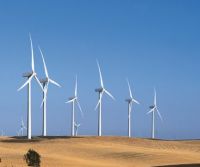
Installed Capacity & Share of Generation
- According to the federal “Wind Exchange” data, by end-2023 (latest official cumulative data) Maine had about 1,031 MW of installed on-shore wind capacity.
- In 2024, the electricity-generation mix for Maine showed wind contributing 20.6% of the total in-state generation.
- The 2024 generation mix also included natural gas (~30.4%), hydroelectric (~27.5%), biomass (~11 %), solar (~7.8 %), and smaller shares from other sources.
Renewable Mix & Context
- Wind remains one of the leading renewable sources in Maine. In 2023, wind accounted for ~27% of the state’s renewable electricity generation.
- Despite a strong renewable portfolio, the top renewables vary: hydroelectric generation still plays a major role alongside wind, with biomass and solar also contributing.
Offshore Wind & 2024 Developments
- A major 2024 milestone: the Bureau of Ocean Energy Management (BOEM) officially designated a “Final Wind Energy Area (WEA)” in the Gulf of Maine — about 2 million acres offshore Maine (and nearby states).
- That WEA represents a theoretical potential of up to 32 GW of offshore wind capacity overall.
- The plan includes floating-turbine technology (because of deep waters), which — if realized — could massively expand Maine’s wind-power contribution.
- In mid-2024, the U.S. government signaled intent to auction offshore wind leases in areas identified in the WEA, covering eight lease zones offshore Maine, Massachusetts and New Hampshire — with potential capacity in some zones of several gigawatts.
Goals vs Reality
- Back around 2008, Maine passed a law (the “Wind Energy Act”) with ambitious targets: roughly 2,000 MW by 2015, 3,000 MW by 2020, and 8,000 MW by 2030 (with a portion expected from offshore wind).
- By 2022, the state was still far behind those targets: ~1,000 MW installed – a little more than a third of the 3,000 MW 2020 goal.
- The prime reasons for falling short include lack of suitable sites (wind + environmental constraints + community acceptance) rather than lack of wind potential.
Economic & Environmental Impacts
- Wind-power projects in Maine have created local jobs, supported investments, and brought economic benefits to many communities — from construction to maintenance and infrastructure improvements.
- Using more wind energy helps Maine reduce reliance on fossil fuels, support cleaner air, and progress toward its renewable energy and climate targets.
What’s Holding Back Expansion — and What’s Next?
Challenges / Constraints
- Many proposed wind development sites are rejected due to site-suitability issues: including wind patterns, environmental impact (wildlife, landscapes), and community/land-use concerns.
- Despite strong wind speeds and capacity, only a fraction of the theoretical potential has been tapped.
Opportunities
- Offshore wind — especially floating turbines — is the most promising frontier for Maine’s wind-power future. The offshore potential could greatly exceed onshore capacity.
- Continued policy support, better permitting frameworks, and technological improvements (for offshore floating turbines) could help Maine approach those long-term goals.
Quick Conclusion
Maine already uses wind for a significant share (~¼) of its electricity — among the highest in New England — but the state is still well below its earlier ambitious targets. The biggest gains in the future are likely to come from offshore wind, which could vastly increase total wind-based generation, if environmental, technical, and regulatory challenges are addressed.