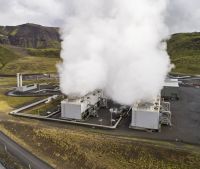
Iceland is one of the world’s leading examples of how to use geothermal energy sustainably and at scale. Here’s an organized overview:
Why Iceland Has So Much Geothermal Energy
Iceland sits directly on the Mid-Atlantic Ridge, where the Eurasian and North American tectonic plates diverge. This creates:
- Abundant volcanic activity
- High heat flows close to the earth’s surface
- Easily accessible geothermal reservoirs
This geology makes geothermal energy one of Iceland’s most cost-effective resources.
How Geothermal Energy Powers Iceland
Electricity Generation
- Roughly 25–30% of Iceland’s electricity comes from geothermal power plants.
- Major plants include:
- Hellisheiði Power Station (one of the largest geothermal plants in the world)
- Nesjavellir Geothermal Plant
- Hellisheiði is the largest geothermal power station in Iceland and among the largest in the world.
- Its estimated annual electricity production is on the order of 2,000–2,200 GWh (gigawatt-hours).
- The plant draws hot geothermal fluid — a mixture of water and steam — from deep wells (typically around 2,000 to 3,000 meters deep).
- That fluid is sent through insulated pipes to separators where steam is separated from the “brine” (hot water).
- The separated steam drives multiple turbines (high- and low-pressure units) to generate electricity.
- Because it’s a geothermal CHP plant, its efficiency — converting geothermal fluid into both usable electricity and heat — is substantially higher per unit of resource compared to producing only electricity.
- The cogeneration design helps Iceland meet both residential heating needs and industrial electricity demand with minimal waste.
Heating
- Geothermal energy provides around 90% of all space heating in Iceland.
- Pipelines distribute hot water from geothermal reservoirs directly to homes, schools, and businesses.
Other Uses
- Hot water for public swimming pools and spas (e.g., the Blue Lagoon)
- Geothermal greenhouses for agriculture
- Fish farming and food processing
- Snow-melting systems under sidewalks and roads
Environmental Benefits
- Very low greenhouse-gas emissions compared to fossil fuels
- Small land footprint relative to hydropower
- Stable, locally produced energy = high energy security
However, it’s not impact-free: geothermal plants can release small amounts of gases like hydrogen sulfide (H₂S), and responsible reservoir management is needed to avoid overuse.
Economic and Social Impact
- Keeps heating prices low for households
- Supports Iceland’s reputation as a clean-energy leader
- Attracts industries needing stable, cheap power (like data centers)
Future Directions
- Enhanced geothermal systems (EGS) research
- Supercritical geothermal drilling projects (e.g., Iceland Deep Drilling Project)
- Potential for increased electricity exports (e.g., via subsea cables—though controversial)