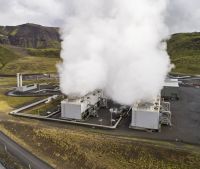
Geothermal energy in Alaska is a small but promising part of the state’s renewable energy landscape, shaped by Alaska’s unique geology, remoteness, and energy needs.
Why Alaska has geothermal potential
- Active geology: Alaska sits on the Pacific Ring of Fire, with many volcanoes and fault systems that create geothermal heat sources.
- High local energy costs: Many rural communities rely on diesel fuel, making geothermal (where available) economically attractive.
- Cold climate advantage: Geothermal heat is especially valuable for space heating, not just electricity generation.
Key geothermal areas and projects
1. Makushin Volcano (Unalaska Island)
- The most advanced geothermal prospect in Alaska.
- Located near the city of Unalaska/Dutch Harbor, a major fishing port.
- Estimated potential: 30–50 MW of electricity.
- Development has been delayed due to high upfront costs, financing challenges, and infrastructure needs, but the resource is well confirmed.
2. Pilgrim Hot Springs (Seward Peninsula, near Nome)
- One of the best-known geothermal sites in western Alaska.
- Temperatures suitable for direct-use heating and possibly small-scale power generation.
- Has been used historically for greenhouses and local heating experiments.
- Interest continues, especially for reducing Nome’s diesel dependence.
3. Chena Hot Springs (near Fairbanks)
- Home to Alaska’s first geothermal power plant (built in 2006).
- Uses low-temperature geothermal water (~165°F / 74°C) with a binary-cycle system.
- Generates about 400 kW, powering the resort and facilities.
- Demonstrates that low-temperature geothermal can work in cold regions.
4. Other volcanic regions
Potential sites include:
- Mount Spurr
- Akutan Island
- Augustine Volcano
- Interior hot spring areas
Most remain undeveloped due to remoteness and cost.
Types of geothermal use in Alaska
Electricity generation
- Limited so far due to small local demand and high capital costs.
- Best suited for places with nearby population centers (e.g., Unalaska).
Direct-use applications (very important in Alaska)
- Space heating for buildings
- Greenhouses and food production
- Fish processing
- Snow melting and district heating
These uses are often more economical than power generation.
Challenges
- High exploration and drilling costs
- Remote locations with little infrastructure
- Small, isolated electric grids
- Financing risk compared to diesel or federal subsidies
Future Outlook
- Geothermal is unlikely to become a major statewide power source.
- It can be transformative locally, especially for rural and island communities.
- Growing interest in hybrid systems (geothermal + wind + solar + storage).
- Federal and state support could unlock more projects as diesel costs and emissions concerns rise.