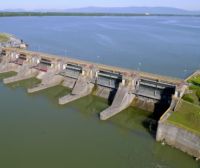
Hydropower exists in Florida, but because of the state’s very flat topography and generally low-head, slow-moving watercourses, small hydroelectric power plays only a minor role in the overall energy mix.
Current Hydropower in Florida
Major Facilities
- Jim Woodruff Dam Hydroelectric Plant – A conventional hydroelectric facility on the Apalachicola River near the Florida–Georgia border; not technically “small hydro” but the main hydropower source in the state.
- C. H. Corn Hydroelectric Generating Station (Jackson Bluff Dam) – On the Ochlockonee River near Tallahassee; this is one of only two hydroelectric plants in Florida and is relatively small in capacity.
These facilities together contribute less than 1 % of Florida’s total electricity generation. Hydropower in the state is largely run-of-river with minimal storage and variable output.
Potential for Small Hydro
Small hydro typically refers to hydropower installations with capacities up to 30 MW (small) or less, and sometimes down to the micro-hydro level (<100 kW).
- A recent assessment shows there is some feasible small hydro potential (roughly 51 MW) and even microhydro sites (~12 MW total potential), mainly where existing infrastructure or natural flow can be used.
- Most opportunities would rely on run-of-river systems or retrofits at existing dams to avoid major environmental impacts.
Why Is Small Hydro Limited in Florida
- Flat terrain and limited elevation changes mean there’s not much “head” (the height difference water falls through), which is essential for generating power efficiently.
- Florida’s rivers often have slow flows and limited storage capacity, reducing reliable generation.
- New large hydro projects are generally not feasible or environmentally desirable given state conditions.
Local or DIY Small Hydro Options (General Context)
Outside utility-scale dams, small or micro hydro installations — from a few kilowatts to tens of kilowatts — can be feasible on private land or small waterways in other regions. These systems often:
- Use micro-hydro turbines (e.g., up to ~100 kW) in small streams with sufficient flow and head.
- Are run-of-stream systems with minimal environmental footprint.
However, in Florida specifically, such small DIY or commercial installations would still generally be constrained by low elevation change and permitting requirements, and you’d need to check state and federal water use and environmental regulations before planning a project.