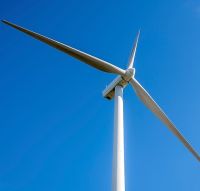
Florida does not have utility-scale wind power — there are no large commercial wind farms operating onshore or offshore. Installed wind capacity in the state is currently 0 MW, and none is under construction.
The state’s wind potential is limited: most of Florida has relatively low average wind speeds, making large-scale wind generation less economically viable compared with other U.S. regions.
Only small customer-owned wind turbines (very low capacity) exist through net metering programs, but these are not utility-scale facilities.
Policy and Legal Landscape
In 2024 Florida passed legislation (e.g., House Bill 1645) that prohibits the construction or operation of offshore wind turbines in state waters and within 1 mile of coastlines or intracoastal waterways.
This effectively bans offshore wind development in areas where the state would have jurisdiction, even though no such wind farms had ever been built there.
Part of the reason cited by lawmakers is that wind power is not seen as cost-effective or reliable for Florida’s energy mix relative to other sources.
Geographical and Technical Challenges
Florida’s geographical profile means wind speeds sufficient for power generation are uncommon on land, and deeper offshore waters (where stronger winds occur) would require special (floating) turbine technologies.
Wind potential offshore often lies in waters deeper than 200 feet, increasing engineering complexity and costs.
Renewable Energy Context in Florida
While wind power hasn’t taken off, Florida has growth in other renewables, especially solar energy, which is strongly supported due to high solar irradiance.
Some cities in Florida have set commitments to reach 100 % renewable energy goals (e.g., Gainesville, Tallahassee by 2050), though these plans tend to emphasize solar and storage solutions.
Conclusion
No large-scale wind farms exist in Florida — either on land or offshore.
State law now prohibits offshore wind development in Florida waters, limiting future wind projects.
Wind energy faces technical and economic barriers statewide due to low wind speeds and hurricane risk, making solar the more attractive renewable option.