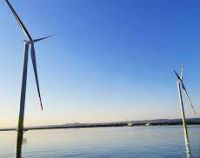
Here’s a clear, up-to-date overview of wind power in Japan — including its current status, recent growth, challenges, and future outlook:
Current Installed Capacity
- As of the end of 2024, Japan’s total installed wind power capacity (on-shore + offshore) reached approximately 5.84 GW (5,840 MW).
- This is up from about 5.21 GW at the end of 2023.
- Growth in 2024 was a record year for new installations, with roughly 663 MW of net new capacity added nationwide.
Onshore vs Offshore Wind
Onshore Wind
- Most existing capacity in Japan is onshore wind.
- Projects continue to be developed in regions with high wind potential — particularly Hokkaido and Tohoku.
- Turbine sizes and average capacity per site are increasing as technology improves.
Offshore Wind
- Offshore wind capacity remains relatively small but is growing.
- Major projects like Ishikari Bay New Port Offshore Wind Farm (about 100 MW) began operating, contributing to capacity growth.
- Total operational offshore wind (fixed or floating) was around 253 MW by end of 2024 across several sites.
Government Targets & Industry Goals
Japan has ambitious plans to significantly expand wind power, especially offshore:
- Offshore wind goals: The government has set targets of about 10 GW by 2030 and as much as 30–45 GW by 2040 — a major national push to diversify energy sources and cut carbon emissions.
- These targets derive from national energy strategies that emphasize renewables in the power mix as part of carbon neutrality by 2050 efforts.
Offshore wind in particular is seen as key for Japan because its long, windy coastline is potentially well-suited for large wind farms — including floating foundations that can work in deeper waters.
Recent Developments
Project Activity
- New offshore wind auctions in 2024 awarded large capacity sites, including 615 MW and 450 MW blocks off Aomori and Yamagata prefectures, respectively, with modern ~15 MW turbines planned.
Industry News
- Some projects have faced headwinds: in 2025, a major developer (Mitsubishi) withdrew from several offshore wind sites due to rising construction and material costs, leading to planned re-auctions.
Those developments illustrate both the opportunities and challenges of building wind power in Japan’s environment — including high costs, grid connection limits, and regulatory hurdles.
Challenges
Some ongoing constraints in Japan’s wind sector include:
- Grid connection limitations, particularly for large offshore farms, restricting full output.
- High construction and financing costs, especially offshore.
- Local permitting and community approvals, which can slow or complicate deployment.
Potential and Outlook
- Japan’s technical wind resource potential is large — estimated at over 700 GW worldwide potential (hundreds of GW onshore + offshore) — far exceeding current installed capacity.
- With policy support, offshore wind could become a much bigger contributor in the 2030s and 2040s.
- The wind market is expected to grow economically as well, with forecasts that wind power could expand several-fold by 2040.