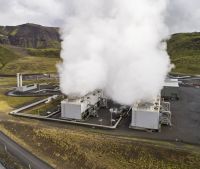
Here’s a quick overview of geothermal energy in Germany — covering current capacity, development, policy, potential, and key projects:
Current Status of Geothermal Power in Germany
Installed Capacity and Use
- Germany has around 42 deep geothermal plants in operation (thermal and electricity combined) with a total installed thermal capacity of about 408 MW and electrical capacity around 46 MW. Most of this is used for district heating, while a smaller share produces electricity.
- Only a few tens of megawatts of electricity are currently generated from geothermal — a very small share of Germany’s overall power mix (roughly ~200 GWh/year, about 0.04 % of total electricity consumption).
Examples of Geothermal Power Plants
- Near Munich, Stadtwerke München operates geothermal ORC power plants (~5.6 MWe each) generating both heat and electricity from deep wells (~4–5 km).
- Numerous local plants supply district heating across German cities, with recent projects in places like Potsdam replacing fossil-fuel systems with geothermal heat supply.
Policy & Growth Plans
Government Strategy
- Germany is actively trying to scale up geothermal (especially for heat) as part of its goal to phase out fossil-fuel heating by 2045. A draft federal law aims to streamline permits, cut red tape, and give geothermal projects similar priority to wind and solar to speed deployment.
- Post-2022 energy shocks heightened interest in homegrown geothermal to reduce dependency on imported gas and stabilize prices.
Potential vs. Reality
Heat Use
- Deep geothermal is already a growing source of renewable heat for district heating networks — potentially covering a significant portion of heating needs with further expansion.
- Near-surface systems (heat pumps) are widespread; roughly 480,000 installations produce thermal energy for homes and buildings.
Electricity Potential
- Geothermal electricity generation in Germany remains limited due to geological constraints (lower natural temperatures in many regions compared to places like Italy or Iceland).
- However, geological assessments indicate very large theoretical potential for power if suitable reservoirs can be economically accessed. Estimates suggest an enormous technical potential — in the range of hundreds of thousands of terawatt-hours — but most of this is theoretical and dependent on technology and local conditions.
Innovation & Future Projects
New Technologies
- Germany is trialing advanced systems such as closed-loop geothermal (Eavor Loop) in Geretsried that could work in areas without conventional hot water reservoirs, potentially boosting power generation prospects if successful.
Ongoing Developments
- Major drilling and exploration projects are underway in locations such as Dettenheim/Karlsruhe, aiming at high-temperature resources suitable for both heat and electricity.
Conclusion
Geothermal in Germany today:
- An established source of renewable heat with growing district heating networks.
- Small but existing electricity generation (~tens of MW).
- Still a minor part of the overall power mix, with substantial barriers to rapid scale-up.
- Policy moves and innovation are accelerating projects and permitting.
Long-term potential: Very large (especially for heat), with emerging technologies and legal reforms expected to expand both heating and power applications.