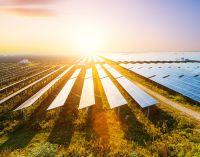
Current Solar Capacity & Growth
Installed capacity
- South Korea’s cumulative solar photovoltaic (PV) capacity was around ~28–29.5 GW by early 2025/late 2024 according to provisional and agency figures.
Annual additions
- New solar capacity added in 2024 was around 3.1 GW, recovering to near pre-decline levels after slower growth in prior years.
- Some estimates for 2024 put new installations at ~2.5 GW depending on how data are counted (e.g., different reporting sources).
These numbers reflect a bounce back after a period of slower solar deployment relative to the peak years around 2020–2021.
National Targets & Policy
Government goals
- South Korea’s 11th Basic Plan for Electricity Supply and Demand sets ambitious solar targets — including roughly:
- ~55.7 GW of solar capacity by 2030, and
- ~77.2 GW by 2038 (nationwide solar PV, excluding storage).
To meet these, analysts say average annual installations must rise to ~4–4.5 GW/year in the late 2020s — more than recent deployment levels.
Recent policy support
- The Ministry of Trade, Industry and Energy (MOTIE) recently launched a tender for 1 GW of new solar capacity with competitive pricing and incentives for lower-carbon modules, showing active procurement support.
- Government cost-reduction roadmaps aim to bring solar electricity costs down (e.g., targeting ~80 won/kWh by 2030) to make solar more competitive.
Deployment Trends & Markets
Where solar is deployed
- Growth has been especially notable on factory rooftops, industrial zones, agricultural land and even floating installations, reflecting diversified siting strategies.
Floating solar
- South Korea has been building notable floating PV projects, including schemes on reservoirs and dams, which help expand capacity without using scarce land.
Corporate & private projects
- Corporate power purchase agreements (PPAs) and self-consumption systems are part of deployment trends, though they’re sometimes not included in official generation statistics.
Challenges Facing Solar Expansion
Grid limitations
- A significant issue is grid connection bottlenecks: many solar facilities are reportedly waiting for transmission capacity to hook into the grid, due to saturation and delays in network expansion.
Policy & cost issues
- Complex permitting, regulatory uncertainty, and higher generation costs compared with some global peers can slow project development.
Market structure
- Korea’s market design and how renewables compete in power trading has been flagged by researchers as needing reform to better accommodate variable solar generation.
Technology supply
- While South Korea does manufacture solar technologies, much of the actual panel supply is still dominated by foreign producers — especially China — which influences the domestic industry’s competitiveness.
Role in the Broader Energy Transition
Energy mix & net-zero goals
- Solar is a key part of South Korea’s clean energy transition, though nuclear power is also expanding in the government’s long-term strategy.
- Renewable energy’s share (including solar) is targeted to grow substantially through the 2030s, contributing to net-zero and energy security goals.
Energy import dependency
- South Korea imports the vast majority of its fossil fuels; expanding domestic solar helps diversify the energy supply and reduce reliance on imports.
Talking points:
Solar power in South Korea is:
- Growing steadily with ~28–30 GW installed and ~3 GW added in recent years.
- Supported by national targets for rapid expansion but constrained by grid and policy challenges.
- Part of broader clean energy goals alongside nuclear and other renewables.