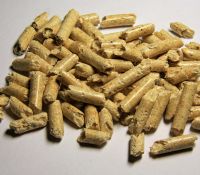
What is biomass and how it’s used in France
Biomass refers to organic material of plant or animal origin used to produce energy — mainly for heat, electricity, biogas, and biofuels. In France it includes wood (forest biomass), agricultural residues, household green waste, agro-industry by-products and manure.
Current contribution to France’s energy mix
Overall energy production
- Biomass is the largest source of renewable energy consumed in France and the biggest among non-fossil sources outside nuclear.
- In terms of the primary energy mix, renewable energies overall accounted for about 16 % of France’s primary energy in 2023 — with biomass making up a large share.
Biomass for heat and electricity
- In 2024, solid biomass (mainly wood burning) accounted for about 123 TWh of primary energy consumption, mostly used for heat.
- For electricity, biomass and related bioenergy sources produced around 10.5 TWh in 2024 — roughly 2 % of France’s total electricity production.
- Breakdown in electricity generation: waste, biogas and traditional biomass.
Biogas and biofuels
- The biogas sector (methanisation) has been growing with increasing numbers of installations producing renewable gas.
- Biocarburants (bioethanol, biodiesel) from biomass represent a share of transport fuel consumption, estimated at about 10 % of total fuel use.
Long-term potential and future trends
2050 prospects
- According to research and government analyses, biomass could provide up to 30 % of France’s final energy demand by 2050 (≈ 260–270 TWh/year) if sustainably mobilised, with agricultural and forest biomass contributing roughly equally.
- Other government estimates suggest the theoretical potential could range between 170 and 250 TWh annually by 2050, reflecting uncertainties and sustainability constraints.
- Agricultural biomass (including residues and crops used in methanisation) may represent a growing share of the total in the future.
Sustainability & policy
- France’s energy policy emphasises sustainable biomass use, balancing energy production with forest and soil health, food production and biodiversity protection.
- Biomass plays a central role in the Programmation pluriannuelle de l’énergie (PPE) and national decarbonisation strategies to expand renewables and reduce greenhouse gas emissions.
Conclusion
✔︎ Biomass is the dominant renewable energy source in France, especially for heat and wood energy.
✔︎ It contributes modestly to electricity (≈2 %) but extensively to heating, particularly residential.
✔︎ Long-term projections see biomass as an important part of decarbonisation if sustainably managed.