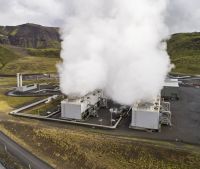
Here’s a quick overview of geothermal power in Italy — its history, current status, and future prospects:
History & Significance
World’s First Geothermal Power
Italy is a pioneer of geothermal electricity: the very first geothermal power experiment was conducted in 1904 at Larderello in Tuscany, where steam from the ground powered a generator that lit a few light bulbs. The first commercial plant followed in 1913, making Italy a historical leader in the technology.
Global Role
Today Italy remains one of the world’s leading geothermal producers — typically ranked just behind the United States and the Philippines in installed geothermal electricity capacity.
Current Geothermal Electricity in Italy
Installed Capacity & Production
- Installed geothermal capacity: ~916 MW, all in Tuscany.
- Annual electricity production: around 5 – 5.7 TWh (2023 data).
- This accounts for about ~2 % of Italy’s total electricity generation, but a much larger share of Tuscany’s electricity, where geothermal can contribute 30 – 36 % of local demand.
Power Plants
There are 34 geothermal power plants operating in Tuscany, mostly managed by Enel Green Power. These are located in areas like Larderello–Travale and Mount Amiata, the historic heartland of Italian geothermal energy.
Beyond Electricity
Direct Uses
Aside from generating electricity, geothermal heat is also used for:
- Heating buildings and district heating systems
- Industrial processes (e.g., greenhouses)
- Spas and tourism (thermal springs are an Italian attraction)
- Heat pumps and geo-exchange systems — though these are still below the levels seen in some Northern European countries.
Research & Value-added Uses
Italian geothermal brines also show potential for strategic mineral recovery (like lithium), which could play a role in battery and energy storage technologies.
Future & Policy
Growth Potential & Plans
Italy’s National Integrated Energy and Climate Plan (PNIEC) envisages adding significant geothermal capacity by 2030 (potentially around +1 GW).
However, growth has been modest — there hasn’t been a major new power plant since Bagnore 4, inaugurated in 2016.
Challenges
- National energy policy historically hasn’t prioritized geothermal as strongly as solar or wind.
- Regulatory and investment barriers remain a constraint to faster deployment.
Geothermal Power in the Renewable Mix
Although geothermal’s share in Italy’s total energy mix is small, its continuous, stable generation complements intermittent renewables (like solar and wind). Combined with Italy’s rich geothermal history and technical expertise, geothermal remains an important part of future decarbonization strategies.