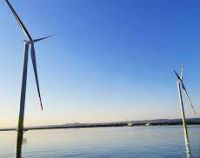
France has been rapidly expanding offshore wind power as part of its energy transition, but compared to countries like the UK or Germany, it is still in a growth phase rather than a mature market.
Here’s a clear, up-to-date overview:
Offshore wind power in France
1) Current status (2025–2026)
- France is relatively new to offshore wind
- In 2025, it added about 408 MW of offshore capacity to the grid
- The country historically relied more on nuclear power, which slowed early offshore wind development
Key milestone
- Provence Grand Large (25 MW)
- First floating offshore wind farm in France
- Located in the Mediterranean
- Uses floating platforms instead of fixed seabed foundations
- Powers ~45,000 people
This project is important because France has deep coastal waters, making floating wind technology especially relevant.
2) Major projects and developments
Large-scale projects
- Centre Manche 2 (Normandy)
- Capacity: 1.5 GW
- One of the largest offshore wind farms in France
- Expected operation: ~2033
- Can power ~1 million homes
Floating wind expansion
- Government-approved plan:
- 3 floating wind farms
- Total capacity: 1.5 GW
- Backed by €11 billion support scheme
3) National targets
France has very ambitious long-term goals:
- By 2030: ~3.6 GW offshore wind
- By 2035: +15 GW total offshore capacity planned
- By 2050:
- Around 40 GW offshore wind
- ~50 offshore wind farms
Recent policy (2026)
- New tenders launched for ~10 GW of offshore wind
- ~5 GW fixed-bottom
- ~5 GW floating
4) Why offshore wind matters for France
Energy transition
- Reduce reliance on fossil fuels
- Complement nuclear energy
- Meet EU climate targets
Geography advantage
- Long coastlines:
- Atlantic Ocean
- English Channel
- Mediterranean Sea
- Deep waters → ideal for floating wind farms
Energy security
- Offshore wind is becoming more important due to:
- energy price volatility
- geopolitical risks affecting fossil fuels
5) Challenges
France faces several obstacles:
- Slow permitting and legal processes
- Local opposition (fishing, coastal views)
- High costs, especially for floating wind
- Supply chain constraints (turbines, cables)
These factors explain why France started later than northern European leaders.
6) Key points
- France is not yet a leader, but is scaling up quickly
- It is becoming a major future player, especially in floating offshore wind
- The next decade (2025–2035) will be critical for expansion