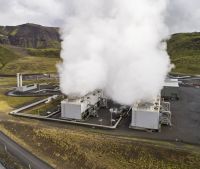
Indonesia is one of the world’s most important geothermal energy countries because it sits on the Pacific “Ring of Fire,” a highly volcanic region with enormous underground heat resources. The country is estimated to hold roughly 40% of global geothermal potential, with estimated reserves around 23–24 GW.
Why geothermal matters in Indonesia
Geothermal energy is especially attractive for Indonesia because:
- It provides stable baseload electricity, unlike solar or wind.
- It helps reduce dependence on coal and imported fuels.
- Indonesia’s geography makes geothermal resources abundant across islands such as Java, Sumatra, Sulawesi, and Flores.
- It supports Indonesia’s long-term decarbonization and net-zero ambitions.
Indonesia currently ranks second in the world for installed geothermal capacity after the United States. Installed capacity is about 2.7 GW as of 2025.
Major geothermal regions and projects
Important geothermal fields include:
- Salak (West Java)
- Wayang Windu (West Java)
- Kamojang (West Java)
- Sarulla (North Sumatra)
- Lahendong (North Sulawesi)
- Ijen (East Java)
Large Indonesian energy companies involved include:
Recent additions include the Ijen geothermal plant and expansions at Salak and Lumut Balai.
Challenges slowing development
Despite huge potential, development has been slower than expected. Key problems include:
- High upfront costs
Exploration drilling is expensive and risky because companies may drill wells that fail to produce enough steam. - Financing difficulties
Investors often prefer cheaper renewables like solar. - Regulatory and permitting issues
Many geothermal areas overlap with protected forests or conservation zones. - Infrastructure limitations
Remote volcanic regions may lack roads and transmission lines. - Local opposition
Some communities worry about environmental impacts, water use, land access, or earthquakes associated with drilling.
Government targets
Indonesia aims to significantly expand geothermal power in the next decade. The national electricity plan targets around 5.2 GW of additional geothermal capacity by 2034.
The government also wants renewables to make up a much larger share of the energy mix as coal dependence declines.
New opportunities
Researchers and companies are exploring:
- enhanced geothermal systems (EGS),
- low-temperature geothermal resources,
- direct industrial heat use,
- and even lithium extraction from geothermal brines for EV batteries.
Overall outlook
Indonesia has the geological resources to become the world leader in geothermal energy. The main issue is not resource availability, but scaling projects fast enough through financing, infrastructure, regulation, and community acceptance. If those barriers improve, geothermal could become one of the foundations of Indonesia’s clean energy transition.