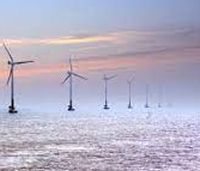
Offshore wind power in the United States is a rapidly emerging but still relatively small part of the energy system, with large future potential but also significant political, economic, and technical challenges.
Overview of offshore wind in the U.S.
- Offshore wind refers to wind turbines installed in oceans or large lakes to generate electricity.
- The U.S. has huge potential resources due to long coastlines and strong winds.
- However, development has been much slower than in Europe and China.
Estimated potential:
- ~1,476 GW (fixed-bottom) + 2,773 GW (floating)
Far more than current U.S. electricity demand.
Current capacity (as of 2025–2026)
- Total installed capacity: ~174 MW
- Only a few operational wind farms
Key projects:
- Block Island Wind Farm (2016) – first U.S. offshore wind farm (30 MW)
- South Fork Wind (2024) – first commercial-scale project (132 MW)
- Larger projects like Vineyard Wind and Coastal Virginia are under construction or scaling up
Compared to Europe (hundreds of GW), the U.S. is still in an early stage.
Projects under development
Major projects (various stages):
- Vineyard Wind 1
- Coastal Virginia Offshore Wind
- Revolution Wind
- Empire Wind 1
- Sunrise Wind
- Total project pipeline:
- 80+ GW potential capacity (2024 estimate)
Enough to power millions of homes if completed.
Government goals
- Target: 30 GW by 2030 (Biden-era goal)
- Long-term potential:
- Could supply 10–25% of U.S. electricity by 2050
Why offshore wind matters
Advantages
- Stronger and more consistent winds than onshore
- Close to major coastal cities (New York, Boston, etc.)
- Large-scale clean energy with no direct emissions
Economic impact
- Billions in investment (ports, ships, supply chains)
- Potential for jobs and manufacturing growth
Challenges
1. High costs
- Offshore projects are more expensive than onshore wind or solar
2. Political uncertainty
- Recent policy changes have paused or canceled projects
3. Supply chain & logistics
- Need specialized ships, ports, and infrastructure
- Weather and ocean conditions complicate maintenance
4. Permitting & local opposition
- Environmental concerns, fishing industry conflicts, visual impact
Recent developments (2025–2026)
- Some projects are progressing and producing power
- Others have been halted or canceled due to policy shifts
- Industry faces uncertain future depending on government direction
Conclusion
- The U.S. offshore wind industry is promising but immature
- It has:
- Massive natural potential
- Very low current deployment
- Future growth depends heavily on:
- Government policy
- Cost reductions
- Infrastructure development