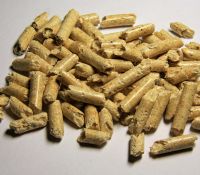
Biomass refers to organic materials — like plant residues, agricultural and forest waste, and some urban organic waste — that can be used to produce energy (electricity, heat, or fuels). It’s considered a renewable, bio-derived source when managed sustainably.
Principal biomass sources in California include:
- Forest residues (slash, small trees, sawmill waste)
- Agricultural byproducts (e.g., orchard prunings, hulls)
- Urban organic material / wood waste
- Manure and other organic wastes processed for biogas
Biomass in California’s Energy Mix
Electricity Generation
California still uses biomass to produce electricity, but it’s a small share of the overall mix:
Installed capacity (2024):
- Biomass power capacity in California was about 1,278 MW.
Electricity produced (2024):
- Biomass generated roughly 4,754 GWh of electricity statewide.
Relative to total electricity production, biomass’s share is modest — a small portion compared with solar, wind, natural gas, and hydro — but still contributes baseload renewable power that can be scheduled when needed.
Industry Scale
- There are 20+ solid-fuel biomass power plants in operation across California’s counties, producing on the order of 500–600 MW of power.
At its peak historically, California had more facilities and greater capacity; but the number has declined as markets and economic incentives changed.
Benefits of Biomass Use
Biomass energy provides several environmental and practical benefits:
Waste Reduction & Air Quality
- Helps divert millions of tons of organic waste from landfills and prevents open burning of ag/forest residues, which would otherwise emit pollutants.
- Biomass power combustion can reduce air pollutant emissions compared to open burning by up to ~98%.
Forest Management & Wildfire Risk
- Removing forest residues for biomass fuel can support forest health and wildfire fuel reduction efforts, a key priority given California’s wildfire challenges.
Reliable Renewable Energy
- Unlike solar or wind, biomass plants can operate continuously (high capacity factors), offering baseload renewable power that supports grid reliability.
Rural Jobs & Economic Activity
- The biomass supply chain (collection, transport, processing) supports jobs, especially in rural and forested areas.
Policy & Regulatory Context
Renewable Portfolio Standard (RPS)
Biomass counts as an eligible renewable resource under California’s Renewable Portfolio Standard, helping utilities meet clean energy targets.
Bioenergy Programs
State agencies like CalEPA provide guidelines and support for bioenergy, such as anaerobic digestion (biogas), dairy waste projects, and permitting frameworks to encourage biomass-based fuels.
Forest & Wildfire Strategy
California’s governance — including task forces and interagency efforts — has increasingly focused on using biomass removal and utilization as part of wildfire mitigation and forest restoration strategies.
Challenges & Environmental Considerations
While biomass has benefits, there are also concerns:
Economic & Market Pressures
- Many biomass plants have faced economic challenges, leading to closures or reduced operations due to aging infrastructure and market conditions.
Air Emissions & Tech Choice
- Improper or inefficient combustion can result in emissions concerns, and not all biomass pathways deliver equal environmental benefits. Some types of biomass use (especially open burning or unmanaged biomass) can increase air pollutants.
Sustainable Feedstock
- Using biomass sustainably — without degrading forests or ecosystems — is essential to ensure true climate benefits